Author: SafeZoneLife

  • Case Study: Securing the Future in the event of a Business Owner’s Death. 

    Peter and Susan, both 35-year-old business partners, faced a critical realization about their successful venture’s future. When confronted with the possibility of one partner’s premature death, they recognized the potential devastation to their business, employees, and the deceased partner’s heirs. To address this scenario, they explored several options in securing the future:

    1. Borrowing money
    2. Using cash reserves
    3. Selling part of the business
    4. Involving heirs in business operations
    5. Purchasing life insurance policies

    After careful consideration, Peter and Susan opted for life insurance policies, specifically choosing Indexed Universal Life (IUL) policies. Here are the key details of their chosen policies:

    Policy Specifics

    • Type: Indexed Universal Life (IUL)
    • Initial Death Benefit: $1,000,000 each (50% of current $2,000,000 business valuation)
    • Premium: $2,500/month for 30 years
    • Cash Value: Equals or exceeds premiums paid after approximately 8 years

    Death Benefit Growth

    The death benefit increases over time to account for business growth:

    YearsDeath Benefit
    Start$1,000,000
    5$1,142,000
    10$1,343,000
    15$2,098,000
    20$2,736,000
    25$2,736,000
    30$3,649,000

    Long-term Benefits

    • Retirement Option: At age 65, each partner can convert the policy to tax-free income of approximately $20,500/month for 25 years
    • Total Premiums Paid: $900,000 ($2,500 x 12 x 30)
    • Total Potential Tax-Free Income: $6,150,000 ($20,500 x 12 x 25)

    Premature Death Scenario

    If one partner dies prematurely, the death benefit is paid to the surviving partner. A properly prepared Buy/Sell agreement (Exit Strategy Blueprint) ensures the remaining partner can pay off the deceased partner’s heirs’ claims while retaining 100% ownership of the business.

    This case study demonstrates the importance of planning for unexpected events in business partnerships. By choosing IUL policies, Peter and Susan have not only protected their business but also secured potential retirement benefits, showcasing the dual advantage of crisis protection and long-term financial planning.

  • Life Settlement Safe Zone

    A simple yet complete explanation of life settlements

    A life settlement is a financial transaction where a life insurance policyholder sells their existing policy to a third-party investor for a lump sum cash payment. This transaction offers policyholders an alternative to surrendering or allowing their policy to lapse.

    Key Features of Life Settlements

    Parties Involved:

    • The policyholder (seller)
    • The third-party investor (buyer)
    • Life Settlement Agent (facilitator)

    Financial Aspects:

    • The cash payment is more than the policy’s surrender value but less than the death benefit
    • The seller receives immediate funds
    • The buyer assumes responsibility for future premium payments

    Types of Policies That Qualify

    • Any Permanent (Cash Value) Policy
    • Term Policy that can be converted

    Ownership Transfer:

    • The buyer becomes the new beneficiary of the policy
    • The buyer receives the full death benefit when the insured person passes away

    Reasons for Choosing a Life Settlement

    Policyholders may opt for a life settlement due to various circumstances:

    • Inability to afford ongoing premiums
    • No longer needing the policy
    • Funding long-term care or medical expenses
    • Addressing other financial needs

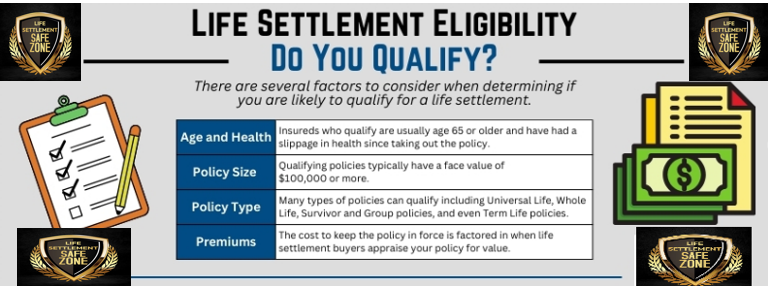
    Eligibility

    Life settlements typically involve:

    • Policyholders aged 65 or older
    • Life insurance policies worth $100,000 or more

    Types of Life Settlements

    1. Traditional: The entire policy is sold for a cash lump sum
    2. Retained Benefit: The seller retains a portion of the death benefit while eliminating premium payments
    3. Viatical Settlement: A specific type for terminally ill policyholders with a life expectancy under two years

    Life settlements provide a way for policyholders to unlock the value of their life insurance policies during their lifetime, offering financial flexibility when circumstances change.

    Free Policy Valuation

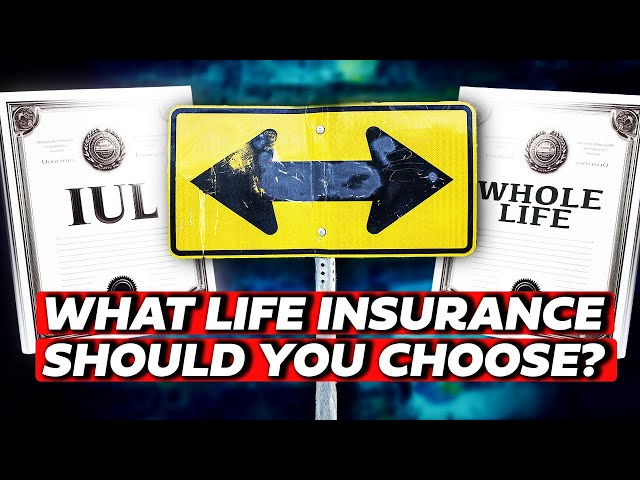
  • IUL Vs. Whole Life: Which Insurance Policy Is Right for You?

    Welcome, class! Today, we’re diving into an important topic in personal finance: the comparison between Indexed Universal Life (IUL) insurance and Whole Life insurance. As your teacher, I’m here to break down these complex concepts and show you why IULs often come out on top. Let’s explore the key differences and see why IULs might be the smarter choice for many people.

    The Basics: IUL vs. Whole Life

    First, let’s define our terms. Both IUL and Whole Life are types of permanent life insurance, meaning they provide coverage for your entire life. However, they differ significantly in how they work and what they offer.

    Whole Life Insurance:

    • Fixed premiums
    • Guaranteed death benefit
    • Cash value grows at a fixed rate

    Indexed Universal Life (IUL):

    • Flexible premiums
    • Adjustable death benefit
    • Cash value growth tied to market index performance

    Why IULs Often Come Out on Top

    1. Higher Return Potential

    Imagine two students, Sarah and Mike, both starting their insurance policies at age 30:

    Sarah chooses a Whole Life policy with a guaranteed 4% annual return. After 30 years, her cash value grows to $250,000.

    Mike opts for an IUL linked to the S&P 500 index. With a historical average return of 8%, Mike’s cash value after 30 years could reach $500,000 or more.

    This example illustrates the significant growth potential of IULs compared to Whole Life policies.

    2. Easier Qualification Process

    IULs often have more lenient underwriting requirements. It’s like having a more understanding teacher who considers your overall performance rather than just your test scores. This means that people with minor health issues might find it easier to qualify for an IUL than a Whole Life policy.

    3. Simpler to Understand

    Contrary to popular belief, IULs can be easier to grasp once you understand the basics. Think of it as a savings account that grows based on market performance, but with a safety net to protect against losses.

    4. Greater Flexibility

    IULs offer more flexibility in several ways:

    • Premium Payments: You can adjust your payments based on your financial situation. It’s like having the option to pay more for extra credit when you can afford it, or less when times are tight.
    • Death Benefit: You can increase or decrease your coverage as your needs change over time.
    • Cash Value Access: IULs typically offer more flexible options for loans and withdrawals.

    Real-World Application

    Let’s consider a real-life scenario. Meet Tom, a 35-year-old small business owner:

    Tom chose an IUL because:

    1. He could adjust his premium payments based on his fluctuating income.
    2. The potential for higher returns aligned with his growth-oriented mindset.
    3. He appreciated the ability to increase his death benefit as his family grew.
    4. The cash value provided a financial safety net for his business.

    Conclusion: Making the Smart Choice

    While Whole Life insurance has its merits, IULs offer a compelling combination of growth potential, flexibility, and accessibility that makes them an excellent choice for many individuals. They provide the opportunity to potentially accumulate more cash value over time, offer easier qualification, and provide the flexibility to adapt to life’s changes.

    Take Action: Get Personalized Advice

    Are you intrigued by the potential benefits of an IUL? Don’t navigate this complex decision alone. Reach out to Mel Kaye at 805-300-1769 for a personalized quote tailored to your unique situation. Mel offers a no-pressure, no-sales-pitch consultation to help you understand your options and make an informed decision about your financial future.

    Remember, just like in our classroom, there are no silly questions when it comes to securing your financial future. Contact Mel today and take the first step towards a more flexible and potentially rewarding insurance policy!

  • My Back-Story

    Throughout my career, I found myself deeply entrenched in the realm of “Corporate Sales.” While I thrived in this environment, I couldn’t shake the discomfort of losing touch with my authentic self. Corporate sales in America can be unforgiving, with relentless pressure to meet quotas, navigate fluctuating percentages, endure management changes, and promote company-mandated programs and products. This focus on the sale rather than the client often led to a disconnect in every interaction.

    Sales training sessions in the corporate world were omnipresent, all geared towards closing deals, overcoming objections, and projecting a façade of consultative selling. However, beneath the surface, it was always about us, not the client.

    During this period, I found myself in situations where I needed life insurance. In each instance, I felt coerced into purchasing policies that weren’t right for me, merely because they were the flavor of the day for the agent I encountered. I felt pressured to conform to a predetermined narrative rather than considering what truly suited my needs. Feeling this pressure, I ended up with policies that didn’t align with my requirements. The agents were solely focused on making the sale, neglecting to educate me on alternative options. After all, I didn’t know what I didn’t know.

    Feeling suffocated by the demands of corporate America and the relentless pressure to conform, I knew I needed a change. I made the bold decision to break free from corporate constraints, forging my path as an independent entrepreneur. My mission became crystal clear: to provide essential services in a nurturing, non-intrusive environment where the client’s needs took precedence.

    This journey led me to establish my own agency, where I could operate on my terms – prioritizing integrity, authenticity, and client-centricity above all else. Embracing this philosophy has revolutionized my approach, fostering genuine connections with clients, and cultivating an environment of trust and transparency.

    By prioritizing the well-being of the client and ensuring a pressure-free experience, I’ve witnessed barriers dissolve and authentic dialogue flourish. This approach not only allows me to tailor bespoke solutions but also generates a steady stream of referrals based on trust and satisfaction.

    By relinquishing the pursuit of quick sales and instead focusing on empowerment, education, and support, I’ve discovered a more meaningful and fulfilling path in what was formerly known as sales. It’s not just about making deals; it’s about making a difference in the lives of those I serve.

    I operate on the principle that it’s not about me; it’s about you. I simply facilitate the appropriate policy if the client chooses to go in that direction.

    I make it abundantly clear to each client that I will not pressure them into making a decision. I am not a closer; I am a facilitator. I will not use pressure; I will rely on facts. I will not resort to guilt; I will employ reason. I will not push the client into adopting a policy before they’re ready. I will support whatever decision the client makes. I will not overcome objections; I will assist the client in taking their next step. My purpose is to provide the client with whatever they need to make an informed decision. This is My Back-Story”.

    About Us | Why “Safe Zone” | 5 Step Process | My BackStory

  • Why “SAFE ZONE”

    Why “Safe Zone”?

    Your contact and personal information is never sold or resold.

    • You would be dealing with me only, no matter how our session ends.
    • No predatory agent calls.
    • Your information is safe in the Safe Zone.

    No Pressure used in the Safe Zone.

    • No pressure to take on a policy before you are ready.
    • Many of you are hesitant to get quotes.
    • Many of you are fearful of pressure tactics and predatory agents.
    • NOT HERE at the Safe Zone
    • You and your information are SAFE.

    Your commitment to me in the Safe Zone

    • There is a price for your safety.
    • Honest feedback
    • Being true to your word
    • If an appointment is made which you cannot keep you will let me know so we can reschedule. NO GHOSTING ALLOWED (Ghost-Free Zone).

    I am an independent broker.

    • I represent over 30 carriers.
    • All plans and policy types available, Including, but not limited to, accidental death, term life, whole life, IULs, and annuities.
    • Territory is the entire United States
    • I offer plans for individuals, families, and businesses.
    • IUL’s are my specialization.

    About Us | Why “Safe Zone” | 5 Step Process | My BackStory

    QUOTE REQUESTS:

  • Are IULs Scams??

    When it comes to IULs, I must address the elephant in the room. Many videos out there refer to the IUL as a scam. Unfortunately, the IUL is dependent on the agent who is presenting it.

    I have seen multiple examples of clients of other agents who were sold a bill of goods. You see, the truth is that the higher the death benefit the higher the commission for the agent. Whereas a tax-free retirement plan, which relies on a lower death benefit and a higher investment portion, reduces the agent’s commission.  This creates a tempting scenario for the less-than-honest agent.

    If you use my agency (the Life Insurance Safe Zone), I will let you know about this potential conflict upfront.

    If you choose to use another agency, make sure that they know that you know the basic structure of an IUL.

    So, the IUL can be the most powerful and flexible policy available, or it can be the product of an unscrupulous agent taking advantage of an uninformed buyer, and thus getting the reputation of being a SCAM. 

    So, the conclusion is that the IUL itself is not a scam, it is the most flexible and powerful policy out there. However, it is a favorite plan for agents who are scammers. This, unfortunately, gives the life insurance business a bad rap. 

    Be VERY CAREFUL as to who you entrust in this business and become informed, or else you will also be asking “Are IULs Scams?”!!

    QUOTE REQUESTS:

  • Cash-Value Life Insurance

    Cash-value life insurance is a type of life insurance policy that combines a death benefit with a savings or investment component. This type of insurance provides not only a payout to beneficiaries upon the policyholder’s death but also accumulates a cash value over time.

    Here are the key features of cash-value life insurance (aka Investment Growth within a Life Insurance Policy):

    1. Death Benefit: Like other life insurance policies, cash-value life insurance pays a death benefit to the designated beneficiaries when the policyholder passes away.
    2. Cash Value Accumulation: A portion of the premium paid by the policyholder goes into a cash-value account. This cash value grows over time, either through interest, investment returns, or a combination of both. The policyholder can access or borrow against this cash value during their lifetime.
    3. Policy Options: There are different types of cash-value life insurance, including whole life insurance, universal life insurance, and variable life insurance. Each type has its own characteristics and may offer various options for premium payments, death benefits, and investment choices.
    4. Premiums: These policies typically have higher premiums compared to term life insurance, which provides coverage for a specific term without an investment component. The extra premium payments contribute to the cash value and the policy’s long-term sustainability.
    5. Flexibility: Policyholders often have the flexibility to adjust their premium payments, death benefits, and the investment allocation of the cash value within certain limits.
    6. Tax Benefits: The cash value in a life insurance policy can grow tax-deferred, meaning that policyholders do not pay taxes on the growth until they withdraw or borrow from the cash value.

    It’s important to note that while cash-value life insurance offers a savings or investment component, it may not be the most cost-effective option for pure life insurance coverage. Individuals should carefully consider their financial goals, risk tolerance, and insurance needs before choosing a life insurance policy. Additionally, consulting with a financial advisor is recommended to fully understand the implications and benefits of cash-value life insurance.

    QUOTE REQUESTS:

  • ACCIDENTAL DEATH INSURANCE

    Guaranteed ADvantage Accidental Death Insurance Features

    ISSUES AGES:

    • 18-70

    ACCIDENTAL DEATH BENEFITS:

    • $50,000 – $500,000 (increments of $1,000)

    • Spouse coverage is 100 percent of the Proposed Insured coverage and child coverage is 20 percent of the Proposed Insured coverage.

    • 24-hour all accident coverage

    • Common Carrier Benefit: provides an additional death benefit equal to the base accidental death benefit

    • Auto-Pedestrian Benefit: pays an additional 25 percent of the accidental death benefit

    FAMILY COVERAGE:

    • Spouse is eligible if age 18-70 and may remain on the policy until age 80

    • Unmarried dependent children under the age of 19, or age 23, if a full-time student at an accredited college or university

    • Dependent child coverage ends at age 21 or 25 if a full-time student Dependent eligibility may vary by state

    OPTIONAL RIDER:

    • Return of Premium Benefit* – Returns a percentage of premiums paid (minus any claims paid) when the policy terminates for any reason other than accidental death                               

    • Issue Ages 18-50

    • If applying for family coverage, both the Primary Insured and spouse must be age 50 and under at the time of application.

    Guaranteed ADvantage Accidental Death Insurance Product and Application Information

    • Guaranteed ADvantage is guaranteed issue for all clients that apply

    • No health questions, medical exams, or occupational restrictions

    • A Proposed Insured cannot have more than one Mutual of Omaha Accidental Death policy in force. If the client has more than one, they will need to decide which policy they would like to keep. AD riders on a life policy are not included in this restriction

    • The Insured can have AD coverage through Mutual of Omaha and any other company

    • A spouse cannot be added to the policy after issue. They will be required to apply for their own policy

    • Newborn children and adopted children can be added to the policy after issue as long as they meet the policy’s eligibility requirements and provide the following written information:

    • Dependent’s full name(s)

    • Date of birth

    • Relationship to the Insured

    • The Primary Insured is the owner of the policy

    • The Payor of premiums must be one of the Proposed Insureds

    • Non-U.S. Citizens may be covered as long as they have a permanent resident card* (green card) and have resided in the country longer than one year

    *Permanent Resident Card Number(s) must be listed on application

    If you would like to obtain Accidental Death Insurance or just find out more about it, please let us know at:

    CONTACT US

    QUOTE REQUESTS:

  • Cash-Value Life Insurance (An Other View)

    A cash-value life insurance policy, often referred to as permanent life insurance, is a type of life insurance that provides both a death benefit to your beneficiaries and a savings component that accumulates cash value over time. This type of policy typically comes in two main forms: whole life insurance and universal life insurance. Here’s how it works, from an other view:

    1. Premium Payments: When you purchase a cash-value life insurance policy, you agree to make regular premium payments, typically on a monthly or annual basis. These premiums cover the cost of the insurance protection, and administrative fees, and contribute to the cash value component of the policy.
    2. Death Benefit: The primary purpose of any life insurance policy is to provide a death benefit. In the event of your death, the insurance company pays a lump sum, a tax-free death benefit to your designated beneficiaries. This money can be used by your beneficiaries for various purposes, such as paying off debts, covering funeral expenses, or providing financial support.
    3. Cash Value Accumulation: A unique feature of cash-value life insurance is the cash value component. Part of your premium payments go into a cash-value account, which is invested by the insurance company. Over time, this cash value accumulates and grows, typically at a guaranteed minimum rate set by the policy. Some policies also offer the potential for higher returns based on the performance of underlying investments.
    4. Tax Benefits: The cash value in a life insurance policy grows tax-deferred, meaning you don’t pay income tax on the gains as they accumulate. In addition, if you take out loans or withdrawals from the policy, they are often tax-free up to the amount you’ve paid in premiums. However, there may be tax consequences if you exceed certain limits or surrender the policy.
    5. Access to Cash Value: You can access the cash value of your policy through policy loans or withdrawals. Keep in mind that taking money out of your policy can reduce both the death benefit and the cash value, and any outstanding loans may reduce the death benefit further.
    6. Policy Flexibility: Depending on the type of cash-value policy, you may have the flexibility to adjust your premium payments, death benefit, and cash-value investment options over time. Universal life insurance policies, in particular, offer more flexibility in this regard.
    7. Surrender Value: If you decide to cancel (surrender) the policy, you can receive the cash surrender value, which is the accumulated cash value minus any surrender charges or fees imposed by the insurance company.
    8. Estate Planning: Cash-value life insurance can be used as an estate planning tool to transfer wealth to heirs or cover estate taxes.
    9. Dividends: Some whole life insurance policies pay dividends to policyholders based on the insurance company’s financial performance. These dividends can be taken as cash, used to purchase additional insurance coverage, or left to accumulate within the policy.

    It’s important to note that cash-value life insurance policies tend to have higher premiums compared to term life insurance, which provides coverage for a specific term (e.g., 10, 20, or 30 years) without a cash value component. Whether a cash-value policy is suitable for you depends on your financial goals, risk tolerance, and insurance needs, so it’s advisable to consult with a financial advisor before making a decision.

  • “Life Insurance Safe Zone” 5-Step Process

    StepMelClient  Details
    1)UnderstandShareThe first step in finding a possible solution is to understand the problem. I need to understand what the client’s current circumstances are and what the desired outcome is before we can talk about possible solutions.
    2)EducateLearnIt’s essential for the client to grasp and understand the various policy options, including their advantages and disadvantages. Even if the client initially seeks a term policy, I will provide them with a comprehensive overview of all the available policy types. It’s possible that the initially requested term policy may not align with the client’s optimal insurance needs.
    3)SolutionsApplyThe client and I will collaborate to identify solutions for the problem and determine the most effective approach. I am an independent broker, representing over 30 carriers. This affiliation grants me access to a comprehensive range of products, including but not confined to Whole Life, Term Life, Indexed Universal Life, Accidental Death, Juvenile, Final Expense, Infinite Banking, Tax-Free Retirement, and High-Yield Annuities.
    4)EmpowerControlThis is the point where the process takes a different direction. Conventional agents, following the way they’ve been trained, usually shift into a ‘closing’ mode. There are countless books prescribing what to do next. Agents are instructed to seize control of the interaction and employ techniques to ‘Overcome Objections.’   However, I take a completely different approach. I’ve always felt uneasy when I start ‘overcoming objections.’ It tends to turn the exchange adversarial, with the agent attempting to invalidate the client’s feelings and thoughts, turning it into somewhat of a game.   You’ll notice that I emphasize the words ’empower’ for myself and ‘control’ for the client. This is where I transfer control of the interaction to the client. I am the only agent I know who follows this process. The predominant techniques used by everyone else, as per their training, involve the use of ‘Scripts’ and ‘Overcoming Objections.’ Personally, I much prefer a more natural and organic exchange with the client. Objections are meant to be discussed, not overcome, in a natural, not scripted way.

    I very clearly communicate the following, at the very beginning of our engagement:
    “This is an important decision and one not to be take lightly. This is your policy. It’s your money. It’s your life, your future and your inevitable death. What to do next is your decision, therefore, you have to be in control of this process, not me.”

    This is where I let the client know that he/she is in control and I will support whatever he/she wants to do. “NO PRESSURE!”
    5)SupportDecideThe last step in the process is to support whatever the client wants to do. It is the client’s decision, and the client needs to, if the client wants to, think about it for a few days, I will encourage it.  If they want to talk to their spouse first, “Yes”, I know that I would have to when making a decision like this.  If they want to obtain competing quotes, I’ll encourage it. Once they see other agent’s techniches they usually come back to me. Then, of course, if they want to process an application, I will quickly and efficiently take them through the process and diligently follow up with the carrier until the approval is communicated.
    About Us | Why “Safe Zone” | 5 Step Process | My BackStory

    QUOTE REQUESTS: